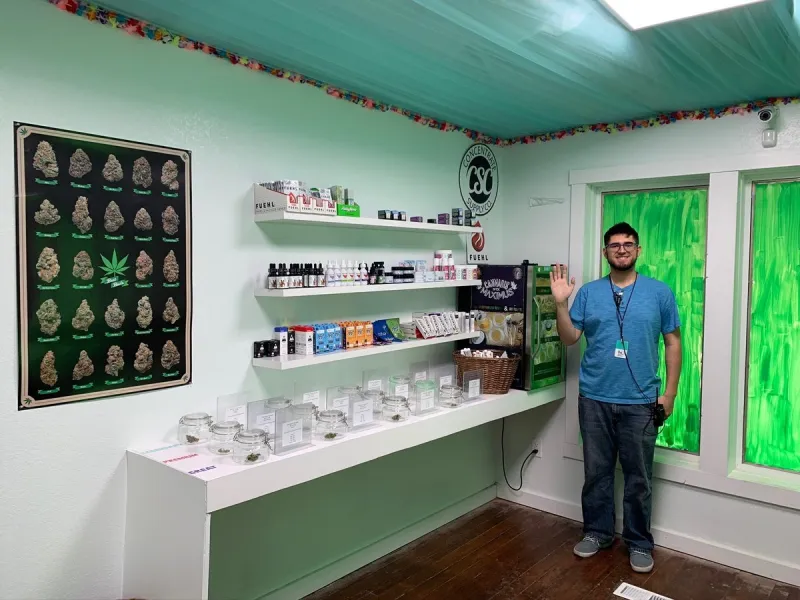
Cabin Fever, Cured: Keeping Cannabis Fresh Through Alpine Humidity Swings
Photo: "Southern Light of Buma" Traditional Handcrafts, Smokers'Stuff MYANMAR, CC BY-SA 4.0, via Wikimedia Commons
There is a special kind of disappointment that comes from opening a jar you were saving for a mountain weekend and finding flower that crumbles like old potpourri. It happens more often up high than people expect. Alpine climates are not uniformly dry or uniformly damp; they are swingy. A cabin can be bone-dry from the heater at noon and humid from a sudden storm by midnight. Your cannabis is sitting right in the middle of that drama.
At Misty Mountain Canna, we have seen enough sad jars to know that storage is not a boring side topic. It is the difference between a stash that tastes like pine and citrus and one that tastes like a cardboard box that once met a lemon. Here is how to protect your flower in cabins, lodges, and high-elevation homes.
What altitude does to cannabis
Cannabis flower is a plant material with volatile oils and a target moisture range. When it is too dry, terpenes evaporate faster, trichomes get brittle, and the smoke turns harsh. When it is too damp, mold and mildew become a real risk. The sweet spot for most cured flower is around 58 to 62 percent relative humidity, kept at a stable, moderate temperature.
Mountain climates complicate that because they are not stable. Winter air can be incredibly dry, especially indoors with a wood stove or forced-air heat running. Summer thunderstorms can push humidity up fast. Day-to-night temperature swings are normal. If your jar is not sealed well, your flower is basically doing a daily workout in a tiny climate simulator.
The four enemies of a mountain stash
Light breaks down cannabinoids and terpenes over time. Heat speeds up evaporation and degradation. Oxygen oxidizes the good stuff and turns aroma flat. Moisture swings push flower back and forth between brittle and risky. Most storage problems are just one of these four getting a foothold.
The cabin setting adds a fifth enemy: human forgetfulness. A jar left on a windowsill, a baggie stuffed in a glove box, a pre-roll sitting on the dashboard while you unpack the car. Altitude does not need to try very hard if we help it.
Build a mountain-proof stash kit
Start with airtight glass jars. Mason jars with a good gasket seal are the classic for a reason. Plastic bags are not airtight enough for long-term storage, and they do not protect against light or crushing. If you are traveling, use a smell-proof case and keep the flower in a small glass jar inside it.
Add a hygrometer if you are storing more than a few grams. These inexpensive little meters tell you what the humidity is actually doing inside the jar. You cannot manage what you cannot measure.
Use humidity packs if your flower is drifting outside the 58 to 62 percent range. They are not a cure for badly dried flower, and they are not a license to seal damp buds in a jar. They are a stabilizing tool. If the flower feels wet or smells like ammonia, do not just add a pack and hope. That is a mold risk.
Keep the stash in a dark cabinet or closet, away from the heater, the stove, the window, and any place where temperatures bounce around. A cool, stable interior wall is better than a fancy shelf in direct sun. Avoid the refrigerator for daily-use flower. Every time you open the jar in a cold fridge, condensation can form. The freezer is for long-term, properly sealed storage if you know what you are doing, not for the jar you dip into every night.
Do not pack flower too tightly. A little headspace is fine. Label the jar with the strain and the date you opened it. Your future self will thank you.
Cabin-specific moves
If the cabin is very dry, a humidity pack can help keep flower from turning to dust. If the cabin is damp, keep the jar sealed and watch the hygrometer closely. Do not leave flower in a bathroom, near a shower, or next to a kettle. If you are staying somewhere with a wood stove, move the stash to a room that is not getting blasted with dry heat.
For concentrates, keep them cool, dark, and upright. Avoid temperature swings that make them messy and hard to work with. For edibles, follow the package instructions. Some are fine at room temperature; others do better in a cool cupboard. Do not assume the cabin pantry is ideal just because it is dark.
If you are leaving the cabin for a long stretch, vacuum-seal what you are not taking with you, or at least use a well-sealed jar in a dark, stable spot. And always follow local possession limits and storage laws. A locked box is not just good practice around guests and kids; it is also a reasonable idea when the cabin rental company sends a cleaner through.
When to let it go
If you see white fuzz, powdery spots, or a smell like ammonia or mildew, do not smoke it. If the flower is so brittle that it turns to powder between your fingers, it is not dangerous, but it is not going to be a great experience. If it smells like hay instead of the strain you remember, the terpenes have taken a hit.
A little care goes a long way up here. The mountain air is part of the appeal, but it does not have to live in your jar. Seal it, stabilize it, and keep it out of the sun. Your next cabin session will taste a lot more like the peak and a lot less like the pantry.