Same Strain, Totally Different Trip: Cracking the Code on Cannabis Unpredictability Across Mountain Elevations
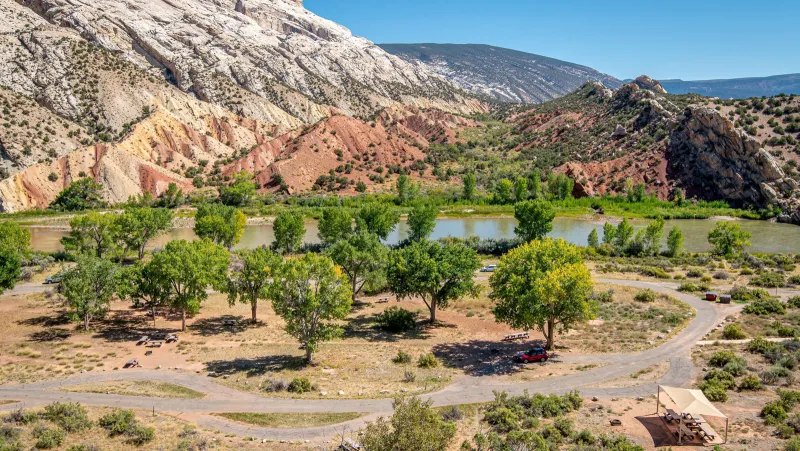
Photo: mountain town cannabis dispensary Colorado altitude hiking scenic, via www.islands.com
You packed the same jar of flower you've been hitting all month at home, drove up to your buddy's place in Aspen, and somehow ended up couch-locked before the second bowl was even cashed. Sound familiar? Maybe the opposite happened — you loaded up in Denver and barely felt a thing until you were halfway up a fourteener. Either way, welcome to one of the most fascinating puzzles in cannabis physiology: why the same strain, same dose, and same person can produce wildly different results depending on where in the mountains you happen to be standing.
This isn't just anecdote. There's real science behind the chaos, and once you start pulling back the curtain on what elevation actually does to your body and your bud, the unpredictability starts making a lot more sense.
Oxygen Is the Invisible Variable Nobody Talks About
Let's start with the big one. As you climb in elevation, the air gets thinner — not in the sense that there's less oxygen by percentage (it's still roughly 21%), but in the sense that there are fewer oxygen molecules per breath. At Denver's mile-high 5,280 feet, you're already taking in about 17% less oxygen per breath than someone at sea level. Bump that up to Aspen at 7,900 feet, and you're looking at closer to 25% less. Breckenridge sits above 9,600 feet. Telluride? Over 8,700.
Why does this matter for cannabis? Because your brain's response to cannabinoids — particularly THC — is closely tied to cerebral blood flow and oxygen availability. When your brain is already working harder to get the oxygen it needs, introducing a substance that further alters blood flow and neural signaling creates a compounding effect. The psychoactive experience gets amplified, the onset can accelerate, and the duration can stretch in ways that feel almost unpredictable.
In short: the same THC load hits a slightly oxygen-deprived brain differently than a well-oxygenated one.
Barometric Pressure and the Body's Hidden Sensitivities
Lower elevation means higher barometric pressure; climb a mountain and that pressure drops. This matters more than most recreational users consider. Your cardiovascular system, sinuses, and even your inner ear respond to barometric shifts — which is exactly why some people get headaches when a storm rolls in and why ears pop on a drive up a canyon.
For cannabis consumers, lower barometric pressure can subtly alter how quickly compounds are absorbed into the bloodstream, particularly when smoking or vaping. Some researchers also suggest that pressure changes affect how the body processes certain terpenes, which play a significant role in shaping the overall character of a high. If you've ever noticed that the same strain smells slightly different at altitude, this is part of why — volatile terpene compounds behave differently in lower-pressure, lower-humidity environments.
Temperature Swings: The Wild Card You Can't Ignore
Mountain towns are notorious for dramatic temperature swings. Moab might hit 75°F in the afternoon and drop to 40°F after sunset. Crested Butte can go from sunny and mild to a full-on snow squall within an hour. These fluctuations aren't just a wardrobe inconvenience — they affect your physiology in ways that interact directly with cannabis.
Cold temperatures constrict blood vessels, which can slow cannabinoid absorption and delay onset. Combine that with the physical exertion of hiking or skiing (which increases heart rate and speeds absorption), and you've got a recipe for wildly inconsistent timing. You might take a few hits before a hike, not feel much for 20 minutes, and then get absolutely walloped mid-trail when your heart rate spikes and your body suddenly processes everything at once.
Conversely, sitting by a warm fire at a mountain cabin can cause vasodilation — widening blood vessels — which speeds absorption and can intensify effects faster than expected.
Acclimatization: Your Body Is a Moving Target
Here's the thing that trips up even experienced cannabis users: your sensitivity to altitude isn't fixed. It changes depending on how recently you arrived, how well-hydrated you are, how much sleep you got, and whether you've been at high elevation long enough to start physiologically adapting.
A first-time visitor to Summit County, Colorado, is going to respond very differently to the same strain than a local who's lived at 9,000 feet for five years. The local's body has adapted — more red blood cells, more efficient oxygen uptake, a cardiovascular system that's learned to work smarter. For them, the altitude amplification effect is significantly reduced.
For the visitor? Everything is in flux. Hydration is critical (altitude increases fluid loss), sleep quality often suffers in the first few nights, and appetite can be suppressed — all factors that influence how intensely cannabis effects land.
The Denver-to-Aspen Spectrum in Practice
Let's map this out practically. Denver sits at a mile high and is often treated as a cannabis baseline for Colorado visitors. Most dispensary budtenders there are accustomed to advising tourists to start lower than they think they need to. But Denver is actually the gentle entry point.
Boulder, at roughly 5,430 feet, is close enough to Denver that most people don't notice a significant difference. But start heading into the mountains — Breckenridge, Vail, Steamboat Springs, Telluride — and you're entering territory where even seasoned Denver consumers should recalibrate.
A useful rule of thumb: for every 2,000 feet you climb above your home elevation, consider reducing your typical dose by 20-25% and extending your wait time between doses by at least 15 minutes. This isn't a hard science formula, but it's a reasonable buffer against the kind of overconsumption that turns a great mountain weekend into a day spent horizontal.
Practical Guidance for Mountain Travelers
So what do you actually do with all this? A few grounded suggestions:
Hydrate aggressively before and during consumption. Dehydration amplifies almost every negative cannabis side effect — anxiety, dizziness, heart rate spikes. At altitude, you're losing water faster than you realize.
Give yourself 24-48 hours before going heavy. If you've just arrived at a high-elevation destination, let your body start adjusting before you break out the heavy hitters. Stick to low-dose edibles or mild flower your first night.
Choose strains with balanced terpene profiles. High-myrcene strains can produce heavy sedation that's further intensified at altitude. Limonene and pinene-forward options tend to stay more manageable in thin air.
Pay attention to your heart rate. If you're already feeling the altitude — shortness of breath, mild headache, slight dizziness — that's your body telling you it's working hard. Adding THC into that mix deserves extra caution.
Trust local budtenders. A dispensary in Telluride or Steamboat is staffed by people who live at that elevation and hear tourist feedback constantly. Their dosing advice is calibrated to the local environment in a way that no general guideline can fully replicate.
The Mountain Keeps Its Secrets — Until You Learn to Listen
The altitude paradox isn't really a paradox once you understand the moving parts. It's a reminder that cannabis doesn't exist in a vacuum — it interacts with your body, and your body is constantly interacting with its environment. The mountain isn't trying to trick you. It's just doing what mountains do: demanding respect, rewarding preparation, and offering something extraordinary to those who take the time to understand the terrain.
Start low, go slow, drink your water, and let the peaks do their thing.