Pack It In, Pack It Out, and Keep It Quiet: Cannabis Etiquette on America's Public Mountain Lands
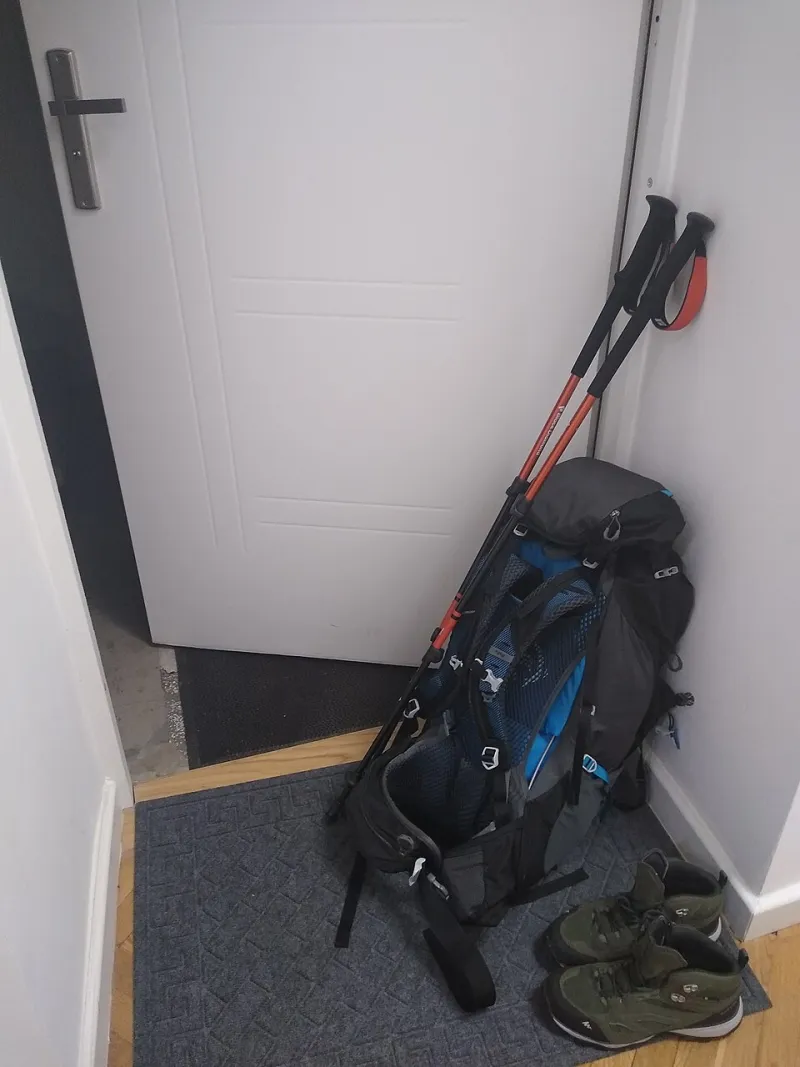
Photo: SGrabarczuk (WMF), CC BY-SA 4.0, via Wikimedia Commons
There's a piece of paperwork reality that never makes it onto the trailhead sign: the gorgeous places you picture when you picture mountain public land — the national forests, the BLM backcountry, the big national parks — are federal ground. And under federal law, cannabis is still not legal. That's the case in 2026, even as state programs mature, even with rescheduling conversations in Washington that keep changing shape. Your state's legal market doesn't extend past the Forest Service boundary line.
So what does that mean for a hiker with a pre-roll in their pack? It means the smart move is to understand the layers before you start climbing. (Which is also our standard disclaimer: we're not your lawyer, rules shift, and you should always check current federal, state, and local guidance before you head out.)
The Trailhead Reality Check
In practice, forest rangers are not staging shakedowns at the kiosk. Enforcement on federal land tends to be complaint-driven and incident-driven. You become a problem when something goes wrong: visible smoke drifting across a busy viewpoint, a fire danger you ignored, a stash left behind, a group that gets loud and weird at a shared picnic area.
That's the real calculus. It's less about what's in your bag and more about whether you're the reason a ranger, a family, or a volunteer trail crew has to have an awkward conversation. Stay invisible in the good sense and everybody's day stays fine.
Odor Is the Entire Ballgame
Smoke is a beacon. It travels downhill in the evening, hangs in basins, and reads from a surprising distance on a switchback. If you're going to consume, the principles are simple: get well off-trail, out of sight of the path, away from campsites you don't control, and out of the wind funnel that dumps everything into the next drainage.
Vapor is lower-profile but not invisible, and cartridges carry their own considerations — battery safety, altitude pressure changes, and the fact that a dead battery up high is just dead weight. Whatever you bring, bring enough self-awareness to match.
Wildlife Doesn't Want Your Snacks or Your Secondhand Smoke
This is the part people underestimate. Edibles are candy-shaped, smell like candy, and get stored like candy. In bear country, that's a problem. Anything scented — flower, gummies, even a bag of trail mix — should live in a scent-proof container or the same food-storage system you're already using for dinner.
And keep an eye on the smaller thieves. Marmots, jays, and raccoons are relentlessly optimistic. A habituated animal is usually a dead animal, and that's a heavy thing to be responsible for on a mountain you came to enjoy.
Fire Risk Is the One Rule With No Wiggle Room
Stage restrictions and red flag warnings are not suggestions. If your county or forest is under a fire ban, that applies to you, your lighter, and your pipe. Lighters get dropped, ash gets scattered, and one careless ember on a dry September ridge can rewrite a whole landscape.
Beyond bans: pack a sealed container for spent material, don't ash into duff or grass, and treat your vape battery like the small lithium fire hazard it is. Don't charge it in a hot car and don't leave it in the sun on a rock while you swim.
Pack Out Everything, Including the Stuff You'd Rather Forget
Leave No Trace isn't a poster, it's a standard. That means roach ends, filters, wrappers, the corner of a bag you tore open, used lighters, and the resin-stained something you'd rather not touch again. Burying it doesn't count. Burning it doesn't count. Leaving it in a fire ring is the kind of thing that gets a whole dispersed camping area shut down for everybody.
Bring a small, sealable, hard-sided container for trash. It's cheap, it's discreet, and it solves most of the problem in one move.
State Parks and Private Ground Are Their Own Weird Universe
Public land isn't one thing. State park systems each write their own rules, and many prohibit cannabis outright even in legal states. Ski resort base areas, gondolas, lodge property, and town-owned parking lots are private or municipal property with their own policies — and a resort can ban you for the season without needing a reason.
Before you go, spend five minutes on the land manager's website. Forest Service, BLM, state parks, county open space, tribal land — they all differ. Tribal land in particular carries its own sovereignty and its own rules, and it deserves real respect.
Be the Ambassador, Not the Anecdote
The cannabis stigma problem doesn't get solved by being louder. It gets solved by being better guests than anyone expected. Share the viewpoint. Keep the volume down. Don't smoke where kids are scrambling on rocks. Clean up a wrapper that wasn't yours. Say hi to the ranger.
Every one of those tiny choices makes it easier for the next person — and for the trail crews, wildlife, and small mountain towns that put up with a lot of us every summer.
The Pre-Trail Checklist
- Know whose land you're standing on and what its rules actually say.
- Check fire restrictions the morning you leave, not the week before.
- Bring a scent-proof container and a sealed trash container.
- Keep consumption far from trails, camps, water sources, and other people.
- Pack out every trace, including the unglamorous bits.
- Leave the wildlife wild and the neighbors unbothered.
The mountains don't need us to be perfect. They need us to be thoughtful, and to leave the place exactly as we found it.