Why Your Mountain High Hits Different: The Real Science Behind Elevation and Cannabis Effects
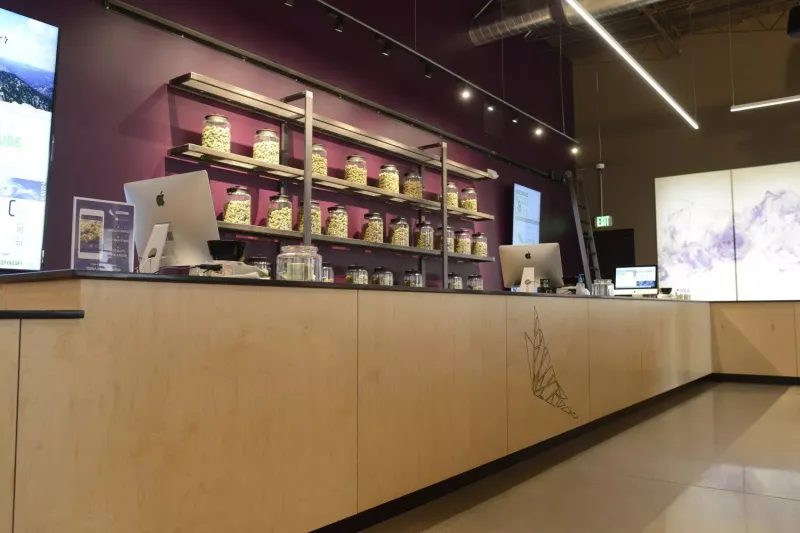
Photo: mountain town cannabis dispensary Colorado altitude scenic peaks, via www.westword.com
You've done this a hundred times at home. Same strain, same amount, same routine. But the moment you crack open that pre-roll somewhere above 8,000 feet — Telluride, Breckenridge, Taos, take your pick — something shifts. The effects arrive faster, hit harder, and linger longer than anything you'd experience back in Miami or Seattle. You're not being dramatic. The mountain air is genuinely rewriting the rules of your cannabis experience, and the science behind it is worth understanding before you head uphill.
Oxygen Is the Unsung Variable Nobody Talks About
At sea level, your body is working with roughly 21% oxygen in the air around you. That number doesn't change as you climb, but what does change is barometric pressure — the force that pushes those oxygen molecules into your lungs with every breath. At 10,000 feet, that pressure drops significantly, meaning each inhale delivers less usable oxygen to your bloodstream than it would at coastal elevations.
Your body responds to this deficit predictably: your heart rate increases, your breathing deepens, and your blood vessels dilate in an attempt to move what oxygen you do have around more efficiently. All of this is happening before you've even lit anything. Now add THC to the equation.
When you inhale cannabis smoke or vapor, THC enters the bloodstream through the lungs and travels to the brain remarkably fast — typically within minutes. At altitude, those already-dilated blood vessels and elevated heart rate accelerate that delivery even further. The result? Onset happens faster, and the initial wave of effects can feel significantly more pronounced than what you're used to at home.
The Hypoxia Factor: When Your Brain Is Already Running Lean
Mild hypoxia — a slight reduction in oxygen reaching your tissues — is a normal part of acclimatization for anyone arriving in a mountain town. For most healthy people, it manifests as a mild headache, occasional lightheadedness, or just a general sense of feeling "off" for the first day or two. It's your body recalibrating.
Here's where it gets interesting: cannabis, particularly at higher doses, can also temporarily reduce oxygen saturation through its effects on breathing patterns. Combine a brain that's already operating with slightly reduced oxygen with a substance that further influences respiratory function, and the cumulative effect can feel dramatically more intense than either factor would produce on its own.
This isn't meant to scare you — it's meant to inform you. Most people tolerate this combination fine, especially with mindful consumption. But it does explain why that half-gummy you ate at your friend's Denver apartment felt like a full one.
Edibles Behave Differently Up Here, Too
Inhalation isn't the only delivery method that altitude affects. Edibles — processed through the digestive system and metabolized by the liver before entering the bloodstream — are also subject to elevation-related physiological changes, though through a different mechanism.
At altitude, your metabolism tends to shift. Many visitors experience changes in appetite, digestion speed, and hydration status, all of which influence how quickly and efficiently edibles are processed. Dehydration, which is extremely common at altitude due to increased respiratory water loss and dry mountain air, can intensify the effects of both THC and CBD by concentrating them in a system that has less fluid buffer to work with.
The practical takeaway: that 10mg gummy you'd normally consider a comfortable dose back in Chicago might behave more like a 15mg experience in the mountains, particularly if you arrived recently and haven't been drinking enough water.
Acclimatization Is Real, and It Matters for Cannabis
The good news is that your body is remarkably adaptive. Given 48 to 72 hours, most people begin producing more red blood cells and adjusting their respiratory patterns to compensate for the lower oxygen environment. As this acclimatization progresses, the amplifying effect of altitude on cannabis tends to moderate — though it rarely disappears entirely.
Seasoned mountain residents often report that they've naturally recalibrated their cannabis habits over time, gravitating toward lower doses, slower consumption, and more deliberate pacing. That's your body's wisdom at work. If you're visiting from sea level, it's worth borrowing that same approach for at least the first few days.
Practical Guidance for the Sea-Level Consumer Heading Uphill
So what does all of this mean in practice? A few straightforward principles can make the difference between a transcendent mountain experience and an uncomfortable afternoon in your hotel room.
Start lower than you think you need to. Whatever your standard dose is at home, consider cutting it by 25 to 50 percent for your first session at altitude. You can always consume more; you can't unconsume what's already in your system.
Hydrate aggressively. This applies to your whole mountain trip, not just cannabis sessions. Dehydration amplifies everything — including the less pleasant aspects of being too high. Water, electrolytes, and avoiding excessive alcohol in the first 24 hours will serve you well.
Give yourself time to arrive. If your itinerary allows, spend your first day or two at altitude without consuming cannabis at all. Let your body begin the acclimatization process before adding additional physiological variables.
Choose your setting intentionally. The disorientation of altitude-amplified effects is easier to manage when you're in a comfortable, familiar environment rather than on a chairlift or a narrow ridgeline trail. Save the more adventurous consumption for after you've gotten your mountain legs under you.
Opt for lower-THC options. High-altitude Colorado dispensaries stock plenty of strains and products with moderate THC percentages — and their staff are genuinely experienced at helping sea-level visitors find the right starting point. Don't be embarrassed to ask for guidance. It's one of the most common questions they field.
What Researchers Are Starting to Understand
The intersection of altitude physiology and cannabinoid pharmacology is still a relatively underexplored area of research, but interest is growing — particularly as legal cannabis markets in mountain states continue to expand. Early findings support what experienced consumers have long reported anecdotally: that the physiological state induced by high-altitude environments meaningfully interacts with the way cannabinoids are absorbed, distributed, and experienced.
Some researchers have also flagged that the endocannabinoid system itself may play a role in altitude adaptation, with the body's own cannabinoid receptors involved in regulating the vascular and respiratory responses to low-oxygen environments. If that line of research develops further, it could offer fascinating new insights into why humans and cannabis have such a complex relationship in mountain settings.
The Mountain Has Its Own Rules
There's a reason the phrase "Rocky Mountain high" carries weight beyond the John Denver catalog. These peaks don't just offer a different view — they offer a genuinely different physiological context for every experience you bring to them, cannabis included. Understanding that context isn't about taking the magic out of the mountains. It's about arriving prepared to meet them on their own terms, so the magic has room to actually land.
Start slow, drink your water, give your lungs a day to adjust, and let the elevation do what it does. The summit will still be there when you're ready.